Building a Newsletter for Marc Sebastian
He has the audience and the content. What he doesn’t have is a newsletter, so here’s exactly how I’d build one, and why every issue does retention work.
9 min read
If you aren’t familiar, Marc Sebastian is a lovely Tik-Toker with a chaotic and calming energy that makes his videos feel like FaceTiming your friend who always has a crazy story (you know the one).
The series that originally got me, and many others, hooked is called The Great American Gay Sidequest. It’s exactly what it sounds like. A gay guy who travels around America stopping at insanely decorated motels, visits small-town psychics, does the occasional ghost hunt, and, of course, digs dog rocks. He just finished another season. He’s creating a masterclass in monetizing whimsy.
But here is what he does not have: a newsletter.
That, my friend, is a nearly criminal amount of opportunity being left on the table.
So today I’m walking you through exactly how I’d build one for him. What I’d put in it, why I’d put it there, and how I’d make sure every issue does actual work. Not vibes work. Retention work.
Lean all the way in on the sidequests
The stupidest thing creators do with a newsletter is try to make it a different thing than what already works for them. If your TikTok is sidequests? Your newsletter should be sidequests.
Not sidequests-adjacent.
Not “behind the scenes of the sidequests.”
We want sidequests, just delivered directly to our email.
Marc is already doing the work. He’s staying at haunted hotels. He’s hunting for opals and quartz in mining fields. He’s finding the one guy in a Texas town who runs a museum out of his garage. The newsletter’s job isn’t to add more work to his plate, instead it’s focused on squeezing the value out of trips he’s already taking.
Build the feedback loops in from issue one
If you’ve read my Dopamail framework, you already know how I feel about this. Every email you send is a chance for the reader to feel like a co-conspirator instead of a subscriber.
For Marc that looks like including readers in the sidequest: what should he try to find at the next haunted venue? Which weird themed restaurant is worth eating at? Which of the three random rocks he found in Big Bend is actually the cool one?
Every reply he gets is worth like ten clicks to Gmail’s inbox algorithm. And every reader who feels heard once will keep opening forever.
When your subscribers become co-conspirators, they help you tell your own story.
Give people the full sidequest
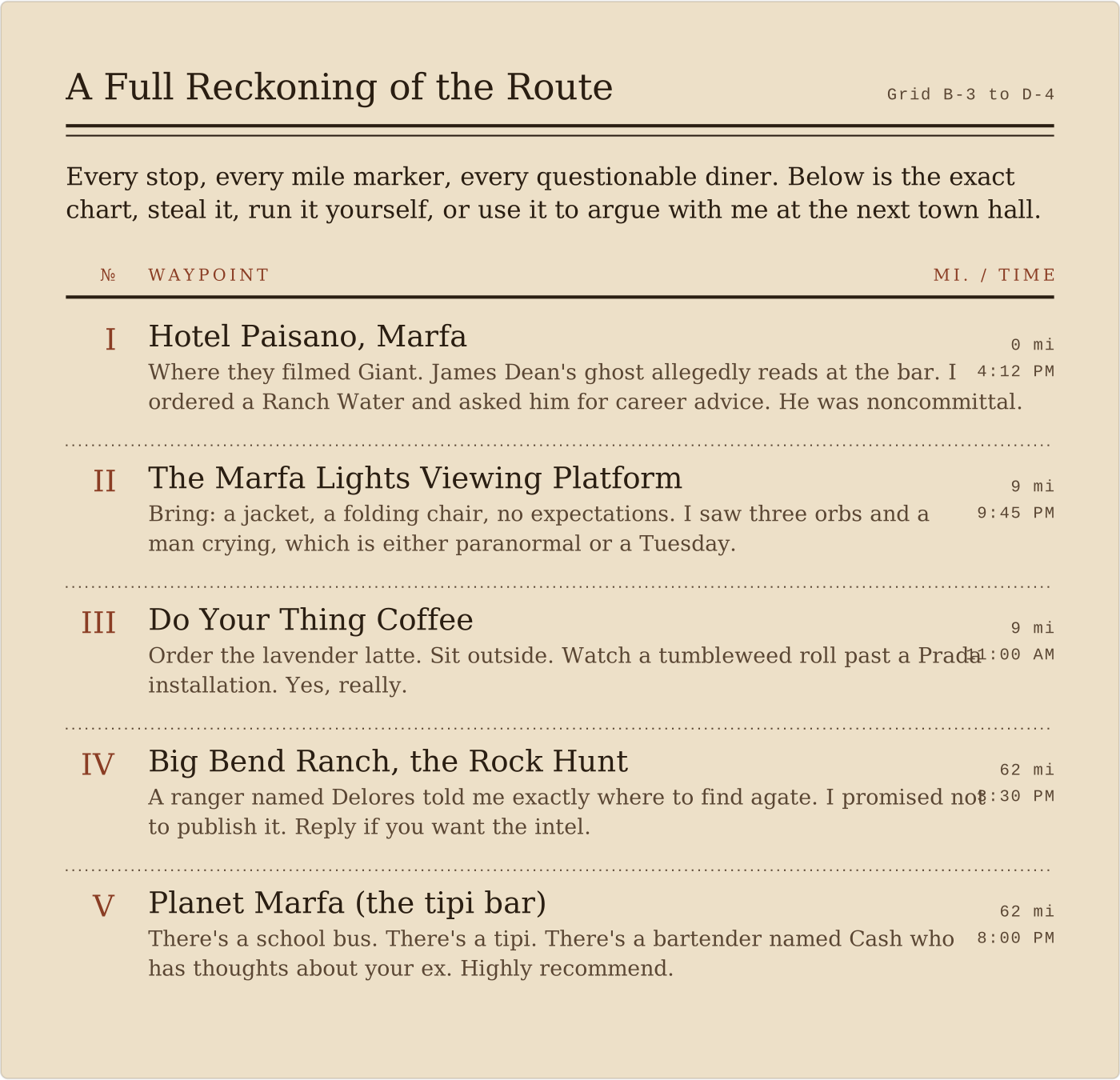
People don’t just want the spark notes in an email. So give them something they can’t google.
The full route. The perfect hotel for each night. The exact restaurant and what to order. The name of the dig site where you went to find agate.
Enough detail that a subscriber could recreate the trip themselves if they wanted to. This could live behind a paywall, sure, but making it dead simple to book a quirky adventure and partnering with brands like Expedia to help people book the hotels allows Marc to get a kickback on every sidequest recreated.
If he wanted to just focus on making travel guides, I would monetize a monthly deep dive that focuses exactly on the itinerary of each state he visits.
The monthly deep dive is paid, but weekly recaps are free.
The specificity IS the paid product.
The illustrated route map
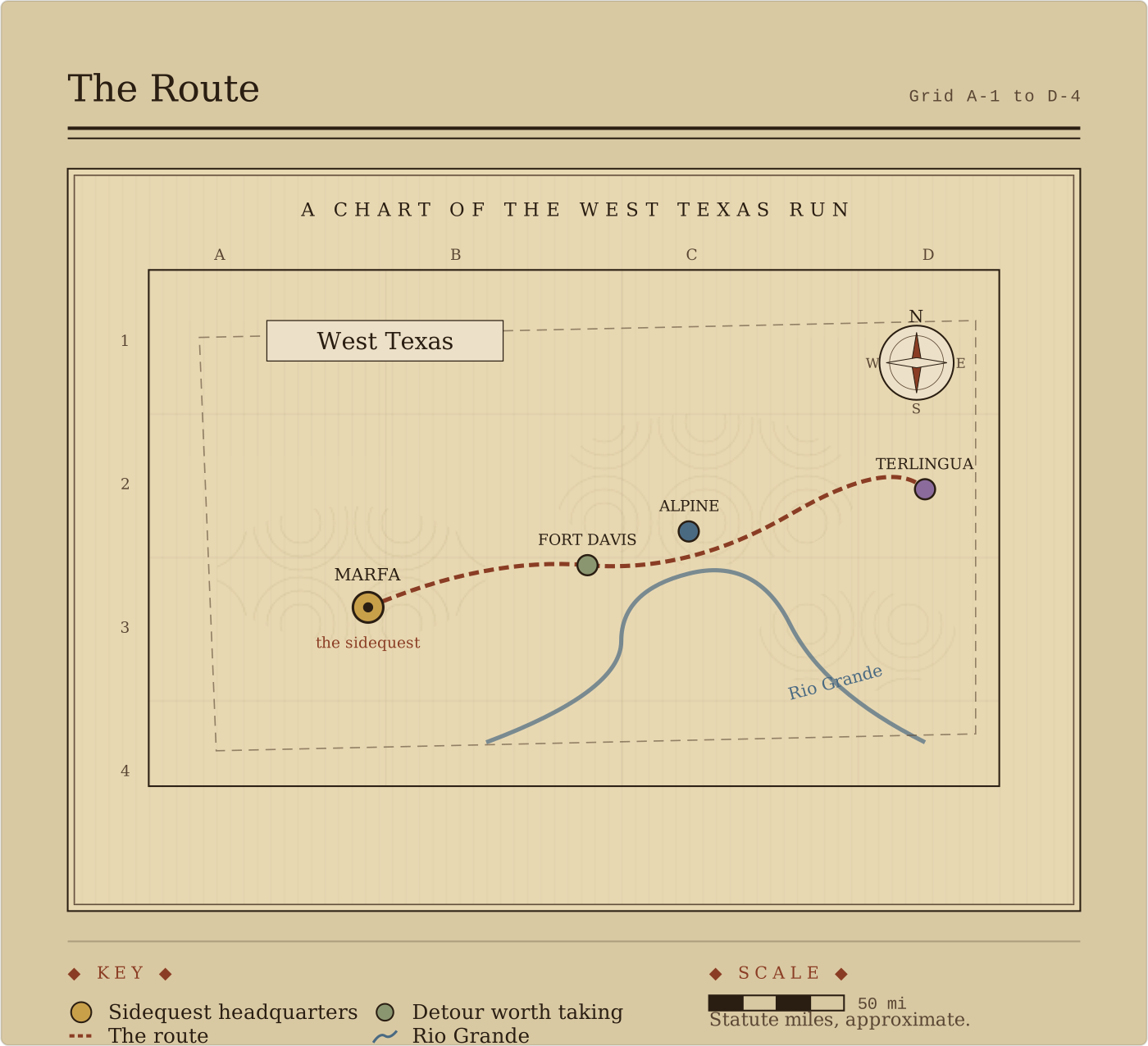
This map is one of my favorite parts of the newsletter for Marc. Not just because it’s an opportunity to be cute, but because it visualizes the exact itinerary that he followed. It’s marked with every stop, so readers get the shape of the whole trip in one image before they even start reading about what happened along the way.
This visualization really helps lean into the side quest aesthetic. Which is exactly why I think he should do it.
Once this newsletter is off the ground for a while, Marc could elevate this and have it click through to an actual side quest map. Where people can leave comments about what they experienced when they recreated the trip on their own side quest.
The reader submissions block
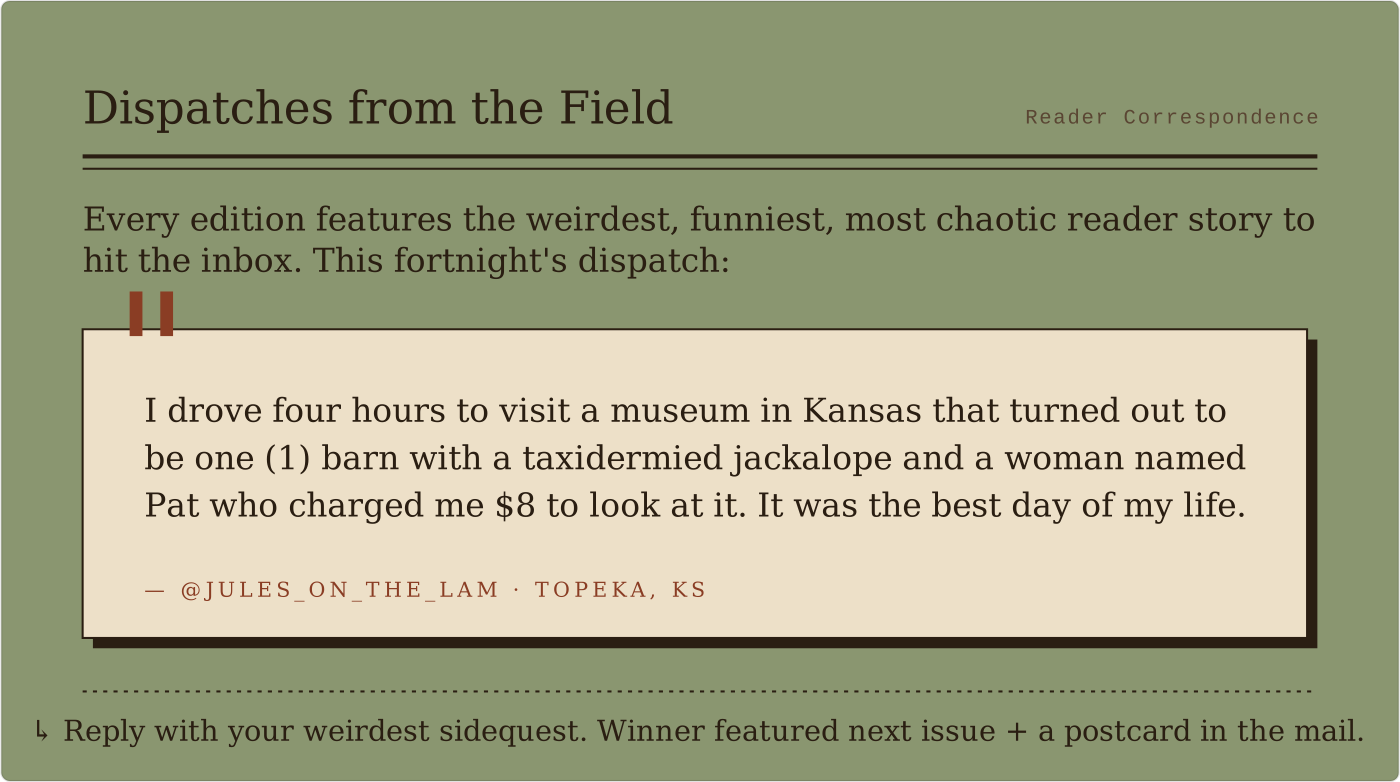
In a dream world each issue should feature a reader story.
The feature doesn’t cost anything, but it does give every reader on the list a reason to reply and to feel seen.
Let’s not forget that replies, again, train the inbox algorithm to see the newsletter as real correspondence and not marketing.
Engagement tactics like this open dopamine feedback loops (like the ones I mentioned earlier), that have increased my client’s engagement rate by 80% over the course of 6 months.
The poll for the next destination
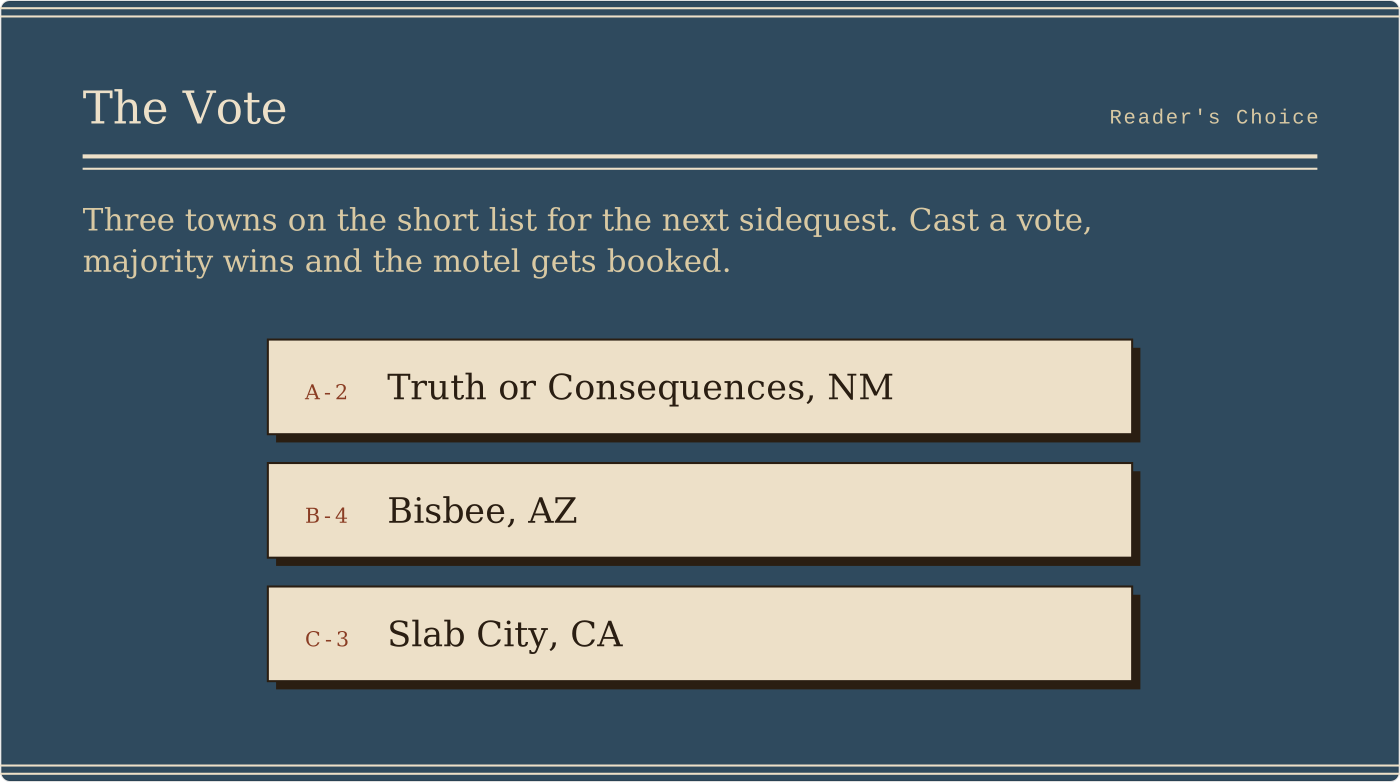
This is the closer of every email, where readers have a chance to vote and the winning majority select the topic of the next issue.
Marc knows what the next issue is about. The reality is that Marc likely has already booked each of those three things ahead of time. The poll just gives him a framework for what the readers really want to hear about.
This also does something else behind the scenes. It opens a loop. It leaves readers wondering: “Did my vote win?” It gives the reader a sense of ownership rather than it remaining a passive email subscription. It becomes something they help make.
This ultimately keeps people reading and engaging. When people realize their vote is the next newsletter, they are more likely to open and vote again. I don’t know what to tell you, it’s science.
Asking your audience what they want is the cheapest retention lever in content marketing.
Here’s my point. Marc already has an audience. He has the side quest content. This newsletter wouldn’t be a pivot. It would be an expansion of the universe the fans already love. Delivered in a format that isn’t controlled by a social media algorithm.
Now let me show you what that actually looks like
A mocked-up first issue, viewed in Apple Mail. Click any number to see the strategy behind it.
Concept work. This case study is unsolicited spec work and is not commissioned by, affiliated with, or endorsed by Marc Sebastian. The newsletter shown is a fictional mockup, and the sender name, address, and copy inside it are invented to demonstrate the approach.